 Save
Save There's something about the smell of butternut squash roasting in the oven that makes a gray afternoon feel instantly warmer. My neighbor stopped by one October with a bag of squashes from her garden, and I found myself roasting one almost by accident, just to see what would happen. That golden, caramelized smell drew my roommate out of their room, and by the time I'd blended it into soup, we were both sitting at the kitchen counter with bowls before I'd even finished seasoning it properly. Now whenever the weather turns chilly, this soup is the first thing I think to make.
I made this soup for my partner's coworkers one snowy evening, and I'll never forget how quiet the room got when everyone took their first spoonful. No one was chatting or checking their phones—just the soft clink of spoons against bowls and the occasional satisfied sigh. That's when I realized that good food isn't about impressing people; it's about making them feel like someone cared enough to take their time.
Ingredients
- Butternut squash: The star of the show—roasting it first develops a deeper, almost nutty sweetness that raw squash can't match.
- Yellow onion: It softens into the background but gives the soup a gentle, savory foundation that makes the spices sing.
- Garlic cloves: Just two cloves; you want warmth and depth, not a raw garlic bite that overwhelms the delicate squash.
- Carrot and celery: These are the quiet helpers that add natural sweetness and body without stealing the spotlight.
- Olive oil: Use good quality here because you'll taste it directly in the final soup, especially after blending.
- Unsalted butter: Optional, but it adds a richness that makes each spoonful feel luxurious—though you can skip it and the soup is still wonderful.
- Vegetable broth: Low sodium is key so you can control the final salt level and taste the squash, not just salt.
- Ground cinnamon and nutmeg: These warm spices are what make this soup feel like autumn in a bowl—don't skip them, and don't be shy with the quantities.
- Kosher salt and black pepper: Taste as you go; every pot of broth is different, so you're the judge of how much you need.
- Heavy cream or coconut milk: A drizzle at the end adds visual appeal and a touch of richness, but it's truly optional.
Tired of Takeout? 🥡
Get 10 meals you can make faster than delivery arrives. Seriously.
One email. No spam. Unsubscribe anytime.
Instructions
- Get your oven ready and prep the squash:
- Preheat to 400°F and line a baking sheet with parchment paper. Toss your cubed squash with a tablespoon of olive oil, a small pinch of salt, and pepper, then spread it out in a single layer—don't crowd the pan or it'll steam instead of roast.
- Roast until the edges caramelize:
- Let it sit in the oven for 25 to 30 minutes until the pieces are fork-tender and the edges have turned a deep golden brown. This is where the magic happens; the caramelization brings out a sweetness that's almost impossible to achieve any other way.
- Build your flavor base while the squash roasts:
- In a large pot over medium heat, warm the remaining olive oil with butter if you're using it. Add your chopped onion, carrot, and celery, and let them soften for about 5 to 7 minutes until they lose their raw edge.
- Bring in the garlic:
- Add those two peeled garlic cloves and cook for just one more minute until the kitchen smells incredible but before the garlic has a chance to brown or turn bitter.
- Combine everything and simmer:
- Add your roasted squash to the pot along with the vegetable broth, cinnamon, nutmeg, salt, and pepper. Bring it up to a boil, then lower the heat and let it simmer gently for 10 to 15 minutes so all the flavors can get to know each other.
- Blend until silky smooth:
- Use an immersion blender right in the pot, working in slow, careful strokes until there are no chunks left and the soup has a velvety texture. If you're using a countertop blender, work in batches and be careful with the hot liquid—never fill it more than halfway.
- Taste and adjust:
- This is your moment to be honest with yourself about salt and spice. Start with what the recipe says, then taste and add more of whatever you think it needs.
- Serve with intention:
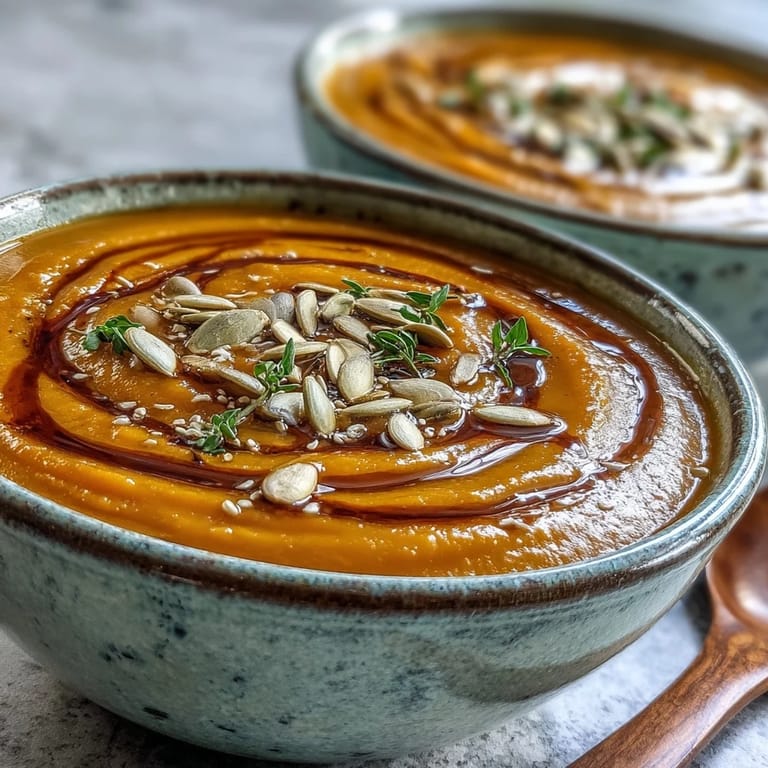
- Ladle the soup into bowls and drizzle with cream or coconut milk if you'd like, then scatter pumpkin seeds and fresh thyme on top for color and a little crunch.
 Save
Save I served this soup to my mom when she was having a rough month, and she asked for the recipe before she'd even finished her bowl. Watching someone you love find comfort in something you made from scratch—that's the real magic here, not the spices or the technique.
Why Roasting Makes All the Difference
Raw butternut squash is mild and a little watery, but when you roast it, something chemical happens—the sugars caramelize, the edges brown, and suddenly you have a vegetable that tastes like it's been kissed by late autumn. I learned this the hard way by making this soup the lazy way first, by just boiling the squash in broth, and the result was flat and forgettable. Now I refuse to skip this step because it's only 30 minutes and it's literally the foundation of everything that comes next.
The Spice Balance That Changed Everything
Too much cinnamon and nutmeg can make this soup taste like dessert, but too little and it just tastes like pureed vegetables. I've learned to add the spices in small amounts first, blend, taste, and then add a tiny bit more if needed—this way you get that warm, cozy feeling without overpowering the natural squash flavor. The black pepper is subtle but important because it adds a little sharpness that makes all the other flavors pop.
Make It Your Own
This recipe is like a warm sweater that fits everyone a little differently. Some people add a pinch of cayenne for heat, some use coconut milk instead of cream for a different kind of richness, and some add a splash of apple cider vinegar at the end for brightness. The beauty of this soup is that once you understand the basic technique, you can adjust it based on what you have in your kitchen and what your mood calls for.
- Try stirring in a splash of apple cider vinegar at the very end to brighten everything up.
- Add a handful of fresh sage leaves to the pot during the simmer for an earthier flavor.
- Serve with crusty bread and let people soak up every last drop.
 Save
Save This soup has become my go-to when I want to feel like I've done something good for myself or someone else, without a lot of fuss. It's proof that simple ingredients and a little patience can create something that tastes like love.
Recipe FAQs
- → Can I make this soup ahead of time?
Yes, this soup stores beautifully in the refrigerator for up to 5 days. Reheat gently on the stovetop, adding a splash of broth if needed to adjust consistency.
- → How do I make this soup vegan?
Simply omit the butter and use only olive oil for cooking. Replace heavy cream with coconut milk or your preferred plant-based cream alternative for garnish.
- → Can I use pre-cut butternut squash?
Absolutely. Pre-cut squash saves time and works perfectly. You'll need about 4-5 cups of cubed squash to replace one 2-pound whole squash.
- → What can I substitute for vegetable broth?
Chicken broth works well if you're not vegetarian. You can also use water with added seasonings, though the flavor will be less robust.
- → How do I prevent the soup from being too thick?
Adjust consistency by adding more broth or water during blending. The soup thickens as it sits, so you can always thin it when reheating.
- → Can I freeze this soup?
Yes, this soup freezes excellently for up to 3 months. Freeze in airtight containers, leaving space for expansion. Thaw overnight in the refrigerator before reheating.