 Save
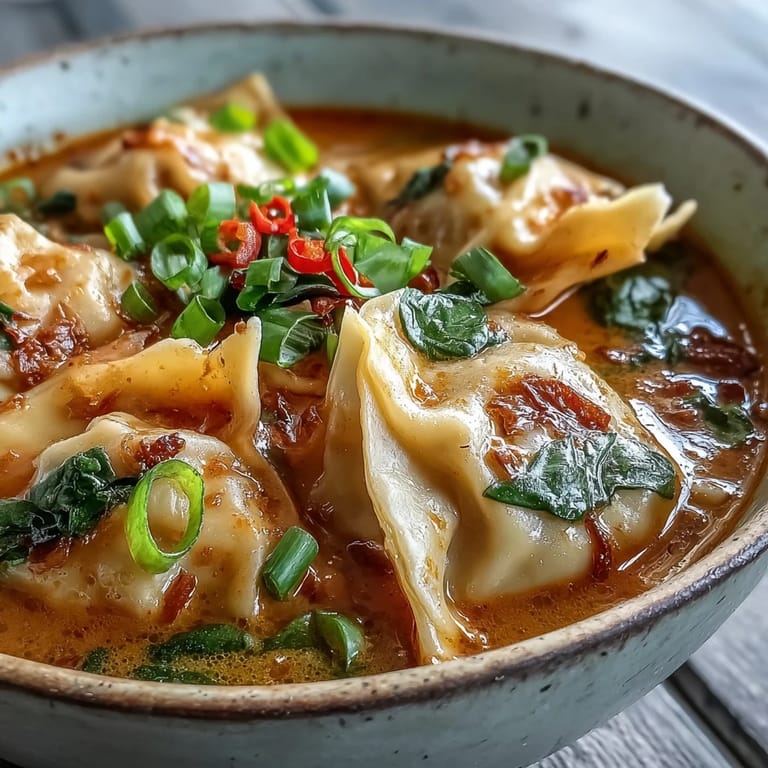
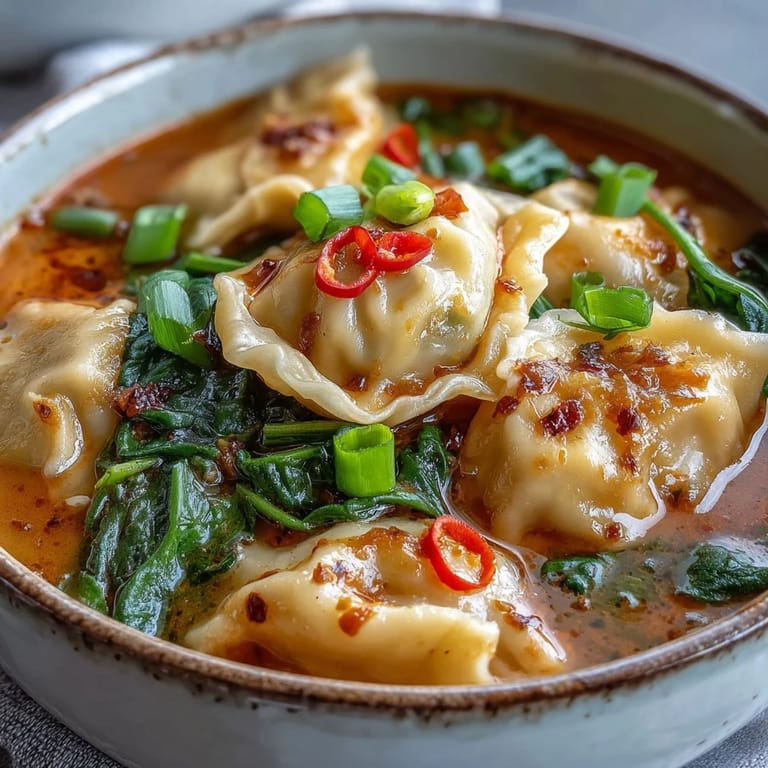
Save There's a Tuesday night I won't forget when my neighbor showed up unexpectedly just as I was staring into an empty fridge, and somehow we ended up creating this red curry wonton soup together in less than half an hour. She pulled out a can of coconut milk from her bag like a magician, I had frozen wontons lurking in the back of my freezer, and what started as improvisation became the kind of meal that made us both slow down and actually talk. The fragrant steam rising from the pot, that perfect balance of creamy and spicy and bright with lime—it felt like we'd discovered something neither of us knew we needed.
I made this soup for my sister after she mentioned offhandedly that she'd been eating sad desk salads for weeks, and watching her close her eyes on that first spoonful—really tasting it—reminded me why cooking for people matters. The way the heat built slowly, the way she asked for seconds, it was one of those small victories that makes you feel capable in the kitchen.
Ingredients
- Vegetable oil: This is your foundation—it needs to be hot enough to carry the fragrance of the curry paste and aromatics without burning them, so medium heat is genuinely where you want to be.
- Thai red curry paste: Use the real thing from the Asian aisle if you can; the jarred stuff at the regular grocery store often tastes muted compared to the depth you get from actual curry paste.
- Fresh ginger and garlic: Mincing these yourself rather than using pre-minced versions changes everything—the oils and texture matter more than you'd expect.
- Low-sodium chicken or vegetable broth: Low-sodium is the move here because the curry paste and soy sauce bring enough salt, and you want to taste the actual broth underneath.
- Coconut milk (full fat or light): Full fat creates a richer, more luxurious soup, but light works if that's what you have—the flavor stays strong either way.
- Soy sauce: Tamari is worth keeping on hand for gluten-sensitive friends, and honestly it tastes slightly cleaner if you're making this for yourself.
- Brown sugar: A teaspoon feels small until you taste the soup without it—it rounds out the heat and sharpness in a way white sugar somehow doesn't.
- Lime juice: Fresh lime is non-negotiable here; bottled lime juice tastes tired by comparison and this soup deserves better.
- Frozen wontons: Buy whatever filling appeals to you, but check that package for cook time since different brands vary slightly.
- Baby spinach or bok choy: Spinach is easier to find and wilts instantly; bok choy adds a slight crunch if you want something different.
- Shredded carrots: Pre-shredded saves time without sacrificing texture or flavor here.
- Scallions, red chili, and cilantro: These are the garnishes that make people say this tastes like it came from somewhere impressive—don't skip them.
Tired of Takeout? 🥡
Get 10 meals you can make faster than delivery arrives. Seriously.
One email. No spam. Unsubscribe anytime.
Instructions
- Heat and bloom the aromatics:
- Pour oil into a large pot over medium heat and let it warm for maybe 30 seconds—you're not looking for smoking, just warm enough that the curry paste starts to release its smell almost immediately when it hits the pan. Add the paste, ginger, and garlic all at once and let them sizzle together for 1 to 2 minutes until your kitchen smells like something good is happening, stirring just enough to keep things from sticking.
- Build the broth:
- Whisk the broth and coconut milk together as you pour them in so the curry paste distributes evenly instead of clumping up in corners, then add soy sauce and brown sugar. Bring it to a gentle boil—not a rolling, aggressive one, just when you see small bubbles breaking the surface consistently.
- Cook the wontons:
- Drop the frozen wontons directly into the simmering broth and let them cook for 5 to 6 minutes (check your package for the exact time since this varies), stirring occasionally so they don't stick together. They'll sink at first, then float to the top when they're done, which is your signal they're cooked through.
- Wilt in the vegetables:
- Add carrots and greens together and let them soften for just 1 to 2 minutes—you want the spinach or bok choy to have that silky texture, not mushy. The carrots won't fully soften but they'll be tender enough, and that slight resistance is actually good.
- Finish with brightness:
- Squeeze in the lime juice and taste the soup before you serve it, adjusting with more lime or soy sauce depending on what your palate is craving that night. Some days you want more heat, some days more savory depth—there's no wrong answer.
- Serve with intention:
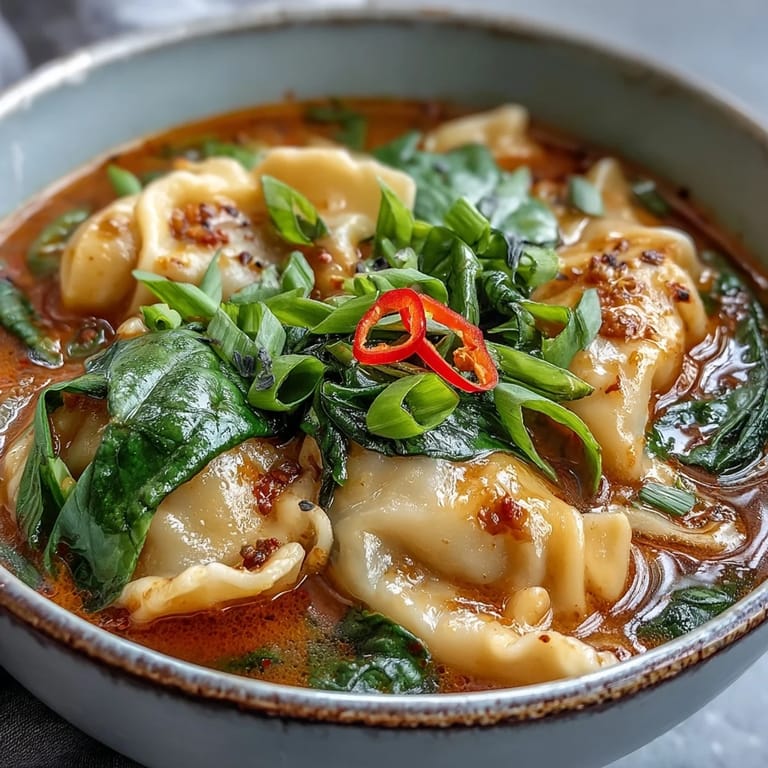
- Ladle into bowls and pile on the garnishes—sliced scallions, cilantro, maybe a thin red chili slice if you're feeling it. Pass lime wedges at the table so people can adjust their own bowls.
 Save
Save There's something about spooning into a bowl of soup that feels like a small act of self-care, especially when it tastes this good and you made it yourself in less time than it takes to order takeout. This one became my go-to when I wanted something that felt substantial and a little exotic without requiring a shopping trip to three different stores.
When to Make This Soup
I reach for this recipe on nights when I want something warm and nourishing but my energy is low—there's no chopping marathon, no waiting around, just 15 minutes of actual cooking time while your kitchen fills with the kind of smell that makes people ask what you're making. It's also genuinely impressive if someone unexpected shows up for dinner, because serving a fragrant, complex-tasting soup in a bowl elevates any casual evening into something that feels a bit more special than it technically was to make.
Building Layers of Flavor
The trick with this soup is understanding that the curry paste, ginger, and garlic need that moment alone in hot oil before you add the liquid—it's not just a cooking step, it's a flavor-building moment that transforms the whole pot. I used to rush through this part and wondered why my soup tasted flat, and then one night I actually sat with it for the full minute or two and suddenly understood why it matters. The oil carries the fragrant oils from the paste and aromatics into every corner of the broth, which is something that happens much less effectively if you just dump everything together at once.
Swaps and Adjustments That Actually Work
Once you understand how this soup works, you can swap ingredients around without losing what makes it good—different greens work beautifully, you can use whatever broth you have on hand, and honestly, if you're out of brown sugar, a tiny splash of honey or even regular sugar does the job. I've made this with Swiss chard instead of spinach, added mushrooms when I had them, used vegetable broth more times than not. The structure stays the same, which means you're building on a solid foundation every time.
- Spinach wilts almost instantly, so add it in the final minute or it'll turn into mush before you can say dinner.
- Fresh red chili slices pack more heat than you'd expect, so start with less than you think and taste before adding more.
- Cilantro is worth fresh-buying if you don't have it—the dried version tastes like sadness by comparison.
 Save
Save This soup has become one of those recipes I make without looking at the instructions anymore, the kind where your hands just know what to do and you can focus on the moment instead of the mechanics. That's when cooking feels least like a task and most like a small, nourishing ritual.
Recipe FAQs
- → Can I use fresh wontons instead of frozen?
Yes, fresh wontons work beautifully in this soup. Since they're already fully cooked, add them during the last 2-3 minutes of simmering just to heat through. Fresh wontons may have a more delicate texture than frozen varieties.
- → What other greens can I use besides spinach or bok choy?
Quick-cooking greens like kale, Swiss chard, or tatsoi all work well. Chop larger leaves into bite-sized pieces so they wilt evenly. Avoid sturdy greens like collards as they require longer cooking time than this quick soup allows.
- → How can I make this soup vegan?
Use vegetable broth instead of chicken broth and select plant-based wontons. Ensure your red curry paste doesn't contain shrimp paste—many Thai brands offer vegan versions. The coconut milk and remaining ingredients are naturally plant-based.
- → Can I make this soup ahead of time?
The broth base can be prepared up to 2 days in advance and refrigerated. However, add the wontons and fresh greens just before serving, as they can become mushy upon reheating. Reheat the broth gently and proceed with adding wontons and greens when ready to eat.
- → What protein options work if I can't find wontons?
Sliced chicken breast, shrimp, or tofu cubes all substitute well. Add raw chicken or tofu when you simmer the broth so they cook through. Shrimp only needs 2-3 minutes and should be added with the greens. Adjust cooking time accordingly based on your chosen protein.
- → How spicy is this soup with standard red curry paste?
Most commercial Thai red curry pastes provide a mild to medium heat level. If you're sensitive to spice, start with 1 tablespoon instead of 2. For more heat, increase the curry paste, add fresh chili slices, or include some of the chili seeds when garnishing.