 Save
Save I discovered this soup on a gray November afternoon when my farmer's market haul sat on the counter looking a bit forlorn—a squat butternut squash, some carrots that had seen better days, and a handful of red lentils I'd been meaning to use. Something about the golden flesh of that squash when I cut into it felt like a small victory against the creeping cold. That first bowl, topped with a swirl of coconut cream and a whisper of cilantro, became my Tuesday ritual, the kind of dish that makes you feel both nourished and genuinely happy.
A few months back, I made this for my neighbor who'd just come home from the hospital—nothing dramatic, just a rough week. I brought it over in a thermos, and watching her face as she tasted it, the way she closed her eyes on that first spoonful, reminded me that sometimes the simplest meals carry the most meaning. She called later to ask for the recipe, and I think that's when I knew this soup deserved to stay in regular rotation.
Ingredients
- Butternut squash: The star ingredient—roasting it first concentrates its natural sweetness and adds a subtle caramelized depth that plain boiled squash just can't match.
- Red lentils: These humble little legumes dissolve into the soup, creating creaminess without any dairy or cream, and they cook in about twenty minutes flat.
- Carrots and onion: The aromatic foundation that softens into sweetness; don't skip the caramelization step with these two.
- Garlic: Always mince it fresh, never use the jarred stuff for this—the aroma as it hits the hot oil is part of the magic.
- Ground cumin, coriander, smoked paprika, and cinnamon: This spice blend is the soul of the soup, warming and complex without being aggressive or overpowering.
- Vegetable broth and water: Use good quality broth if you can; it truly does make a difference in the final flavor.
- Olive oil: Two tablespoons total—one for the squash, one for sautéing—keeps things light but flavorful.
Tired of Takeout? 🥡
Get 10 meals you can make faster than delivery arrives. Seriously.
One email. No spam. Unsubscribe anytime.
Instructions
- Roast the squash until it's golden:
- Preheat your oven to 400°F and line a baking sheet with parchment. Toss your cubed squash with a tablespoon of olive oil, salt, and pepper, then spread it in a single layer. Let it roast for 25 to 30 minutes—you're looking for the edges to turn golden and the flesh to soften enough that a fork slides through easily.
- Build the flavor base:
- While the squash roasts, warm a tablespoon of olive oil in a large pot over medium heat. Add your chopped onion and sliced carrots, cooking them down for about five to seven minutes until they start to soften and the edges catch a little color. This is where the sweetness develops.
- Toast the spices:
- Add your minced garlic along with the cumin, coriander, paprika, cinnamon, and cayenne if you're using it. Sauté just for a minute—the moment your kitchen smells like warm spices and toasted aromatics, you know you're on the right track.
- Combine and simmer:
- Stir in your roasted squash, rinsed red lentils, vegetable broth, and water. Bring everything to a boil, then lower the heat and let it simmer uncovered for about twenty minutes. You'll watch the lentils dissolve and the vegetables become completely tender.
- Blend until silky:
- Once the soup has cooled slightly, use an immersion blender to puree it directly in the pot until completely smooth and creamy. If you don't have an immersion blender, carefully transfer the hot soup in batches to a countertop blender and blend until velvety.
- Taste and adjust:
- Return the soup to low heat and taste it carefully. Add salt and pepper as needed—remember that seasonings always taste different once they've been blended. If the soup feels too thick, thin it with a splash more broth or water until it reaches the consistency you want.
- Serve with care:
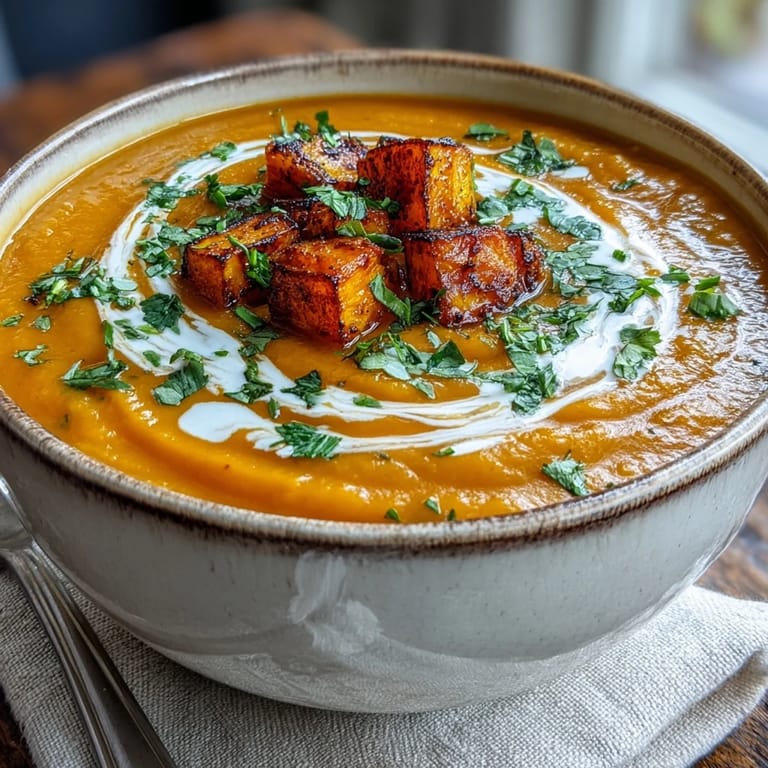
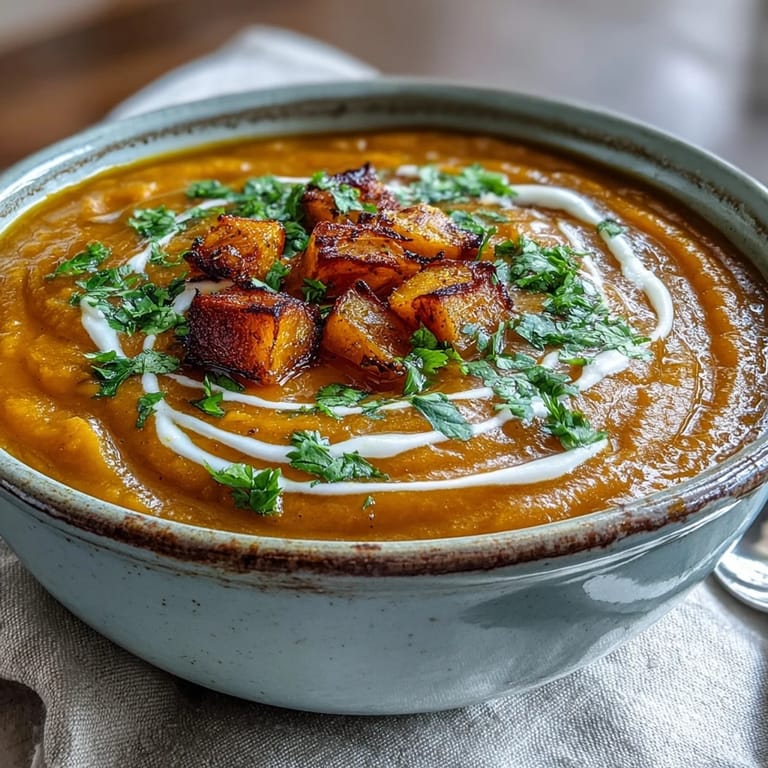
- Ladle the soup into bowls and top each one with fresh cilantro or parsley and a generous swirl of coconut cream or plant-based yogurt if you have it. A squeeze of lemon juice over the top is optional but honestly transforms the whole thing.
 Save
Save There's something about ladling this soup into a bowl on a chilly evening—the steam rising up, the golden color, the smell of cinnamon and paprika—that feels like a small act of self-care. It's the kind of dish that quietly says you matter enough to make something nourishing.
The Magic of Roasting
The difference between a good butternut squash soup and a great one often comes down to that roasting step. I learned this the hard way after making it once with raw squash that I'd just boiled—the result was watery and one-dimensional. Roasting concentrates the squash's natural sugars and develops a subtle caramelization that makes the entire soup taste deeper and more complex. It takes a few extra minutes, but those thirty minutes in the oven are some of the best time you'll spend preparing this dish.
Why Red Lentils Are the Star
Red lentils are the unsung heroes here—they cook quickly and dissolve into the soup, creating that creamy texture that normally requires heavy cream. Unlike brown or green lentils that hold their shape, red lentils break down completely and thicken the broth naturally. The first time I made this soup with green lentils instead (because that's what I had on hand), I ended up with chunks of lentils floating in broth and had to do extra blending. Once I switched back to red lentils, everything came together effortlessly and the texture became what it should be—silky and luxurious without any dairy.
Customizing Your Spice Profile
The spice blend here is warm and inviting, but it's also flexible enough to shift with your mood or what you have in your cupboard. I tend to go heavy on the cumin because I love its earthy richness, while my partner prefers a touch more cinnamon for sweetness. The smoked paprika is what gives the soup its subtle depth—don't leave it out—and the cayenne is entirely optional depending on whether you want a gentle warmth or something with a bit more kick.
- If you're short on spices, cumin and paprika alone will still create a delicious soup.
- Add a squeeze of fresh lemon juice just before serving to brighten all the warm spice notes.
- For extra richness, stir in a splash of coconut milk at the end instead of just using it as a garnish.
 Save
Save This soup has become my go-to when I want to feel grounded and warm, especially as the seasons shift toward cooler months. It's proof that the simplest ingredients, treated with care and just a little patience, can become something that feels genuinely nourishing for both body and spirit.
Recipe FAQs
- → Can I use a different type of squash?
Yes, you can substitute with kabocha squash, sweet potato, or pumpkin. Cooking times may vary slightly depending on the vegetable's density.
- → What can I use instead of red lentils?
Yellow lentils work well as they break down similarly. Green or brown lentils can be used but won't create the same creamy texture when blended.
- → How do I store leftover soup?
Store in an airtight container in the refrigerator for up to 5 days. The soup also freezes well for up to 3 months. Thaw overnight and reheat gently on the stovetop.
- → Can I make this soup without roasting the squash?
Yes, you can cube and add the raw squash directly to the pot with the other ingredients. However, roasting enhances the natural sweetness and adds depth of flavor.
- → How can I make the soup creamier?
Stir in coconut milk, coconut cream, or cashew cream after blending. You can also add a peeled potato during cooking for extra body and creaminess.
- → Is this soup spicy?
The soup has gentle warming spices with optional cayenne pepper for heat. Omit the cayenne for a milder version, or increase it for more kick.