 Save
Save There's something about the smell of butternut squash roasting in the oven that makes a kitchen feel like home, even on days when everything else feels chaotic. I discovered this soup on a crisp October afternoon when I had a squash sitting on my counter that seemed to mock my indecision about what to make with it. My neighbor stopped by, caught a whiff of what I was cooking, and ended up staying for a bowl—and then another. That's when I knew this recipe was something worth perfecting.
I made this soup for my mom's book club, and honestly, I was nervous—these women have sophisticated palates and don't settle for ordinary. But watching them go quiet mid-conversation to savor a spoonful, and then seeing them trade recipes with each other before they left, that moment felt bigger than just soup. One of them texted me weeks later asking if I could make it for her daughter's college care package idea, which made me laugh and also feel strangely proud of butternut squash.
Ingredients
- Butternut squash (about 2 lbs, peeled, seeded, and cubed): The star of this soup, roasting it brings out natural sweetness that balances the sharp cheddar beautifully—don't skip the roasting step, it transforms everything.
- Broccoli (1 large head, cut into florets): Roasts alongside the squash and adds an earthy note that keeps the soup from tasting one-dimensional or overly sweet.
- Yellow onion (1 medium, diced): This aromatics base gives the soup depth and a subtle sweetness that rounds out the flavors.
- Garlic (2 cloves, minced): Just enough to whisper in the background without overpowering—trust me, restraint here is key.
- Olive oil (2 tbsp): Helps the roasted vegetables caramelize and develop that golden-brown exterior that makes all the difference.
- Vegetable broth (4 cups): Use a good quality one if you can; it becomes the foundation of the entire soup's flavor profile.
- Whole milk (1 cup): Creates creaminess without heaviness—plant-based milk works beautifully if you're going that route.
- Water (1 cup): Keeps the soup from becoming too concentrated and allows the individual flavors to shine through.
- Sharp cheddar cheese (1 1/2 cups, shredded): Avoid pre-shredded if possible; freshly shredded melts smoother and tastes noticeably sharper and more vibrant.
- Unsalted butter (2 tbsp): Starts the aromatics and adds richness that you'll notice in every spoonful.
- Smoked paprika (1/2 tsp): Adds a subtle smokiness that makes people wonder what that mysterious layer of flavor is.
- Black pepper (1/2 tsp): Fresh ground makes a real difference here, so skip the pre-ground if you have a grinder.
- Salt (1 tsp, plus more to taste): Taste as you go near the end; the broth and cheese already contain sodium, so you might need less than you think.
- Cayenne pepper (pinch, optional): A tiny whisper of heat that elevates the soup without making it spicy—I always add it.
Tired of Takeout? 🥡
Get 10 meals you can make faster than delivery arrives. Seriously.
One email. No spam. Unsubscribe anytime.
Instructions
- Preheat and prepare your workspace:
- Get your oven to 425°F and line a baking sheet with parchment paper—this small step makes cleanup so much easier and helps your vegetables roast evenly. Set yourself up for success.
- Season and spread the vegetables:
- Toss your cubed squash and broccoli florets with olive oil, salt, and pepper until everything is well coated and glistening. Spread them out in a single layer so they can roast rather than steam; this is where the magic starts.
- Roast until golden:
- Pop them in for 25 to 30 minutes, giving everything a stir halfway through. You're looking for tender vegetables with browned edges that hint at caramelization—that's when you know the flavor has deepened.
- Build your aromatic base:
- In a large pot, melt butter over medium heat, then add your diced onion and let it soften for about 4 to 5 minutes until it becomes translucent and sweet-smelling. Add the garlic and let it bloom for just a minute more—you'll smell when it's ready.
- Combine everything:
- Add your roasted vegetables to the pot, then pour in the broth and water, stirring in the smoked paprika and cayenne. Let it all come together and start to smell incredible.
- Let flavors meld:
- Bring the whole thing to a gentle simmer and let it cook for about 10 minutes—this quiet time allows all those roasted flavors to really get to know each other.
- Blend to silky smoothness:
- Using an immersion blender right in the pot, puree everything until completely smooth and velvety, or transfer in batches to a regular blender if that's what you have. There's something satisfying about watching the transformation happen.
- Add the cheese and cream:
- Stir in the milk and shredded cheddar over gentle heat, stirring constantly until the cheese melts into a creamy dream—never let it boil or you'll break the emulsion. Taste and adjust salt as needed.
- Serve with intention:
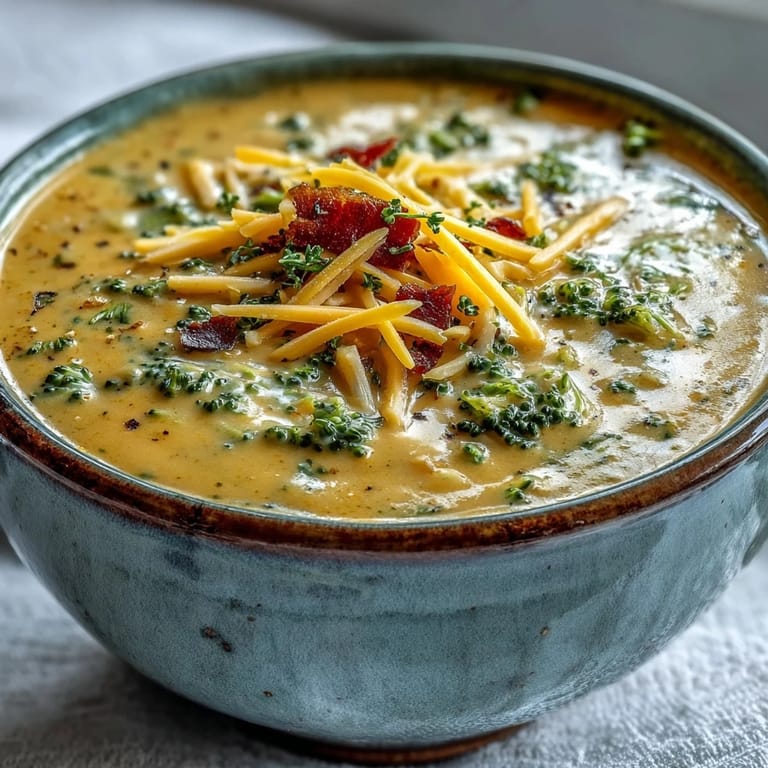
- Ladle into bowls and add whatever garnish calls to you—extra cheddar, roasted broccoli florets, or a crack of fresh pepper.
 Save
Save  Save
Save This soup reminds me that the simplest recipes often teach us the most—that good ingredients, proper technique, and a little patience create something that nourishes both body and soul. There's comfort in knowing exactly what's going into your bowl, and that's really what this soup is about.
The Magic of Roasted Vegetables
Roasting vegetables changes their entire personality in a way that simmering never could. When butternut squash gets time in a hot oven, the natural sugars caramelize and concentrate, creating this deep, almost nutty sweetness that makes the soup taste like autumn in a bowl. The broccoli develops crispy edges and loses that raw, sulfurous quality that can feel aggressive in a soup, becoming instead something tender and almost sweet. I learned this the hard way by trying to skip the roasting once, throwing raw vegetables straight into broth, and ending up with something that tasted like disappointment and wasted ingredients.
Choosing Your Cheese Wisely
The sharpness of the cheddar is what keeps this soup from tasting one-note or overly sweet, so don't reach for mild cheese thinking it'll be friendlier. Sharp cheddar has more developed flavor and complexity, and when it melts into warm broth, it creates this savory backbone that makes your taste buds wake up. If you can, buy a block and shred it yourself—pre-shredded cheese has anti-caking agents that prevent it from melting as smoothly, and you'll notice the difference in texture and how easily it incorporates into the soup.
Variations and Personal Touches
This soup is more flexible than it appears, and I've learned that's part of what makes it special. I've added roasted garlic for deeper richness, a touch of apple cider vinegar for brightness before serving, crispy sage for an unexpected herbal note, or even a splash of bourbon for complexity on nights when I'm feeling fancy. The base is strong enough to handle experimentation, but solid enough that it never needs it.
- For a vegan version, use plant-based milk and dairy-free cheddar, and the soup loses nothing in translation.
- Add a squeeze of fresh lemon juice right before serving to brighten everything and cut through the richness with elegance.
- Serve alongside crusty bread, a simple green salad, or with roasted chickpeas stirred in for extra protein and texture.
 Save
Save  Save
Save This butternut squash broccoli cheddar soup has become my go-to when I want to feel like I've done something thoughtful for the people I'm cooking for, even though it's really quite straightforward. That's the real magic right there.
Recipe FAQs
- → Can I make this soup dairy-free?
Yes, substitute the whole milk with plant-based milk such as almond or oat milk, and use vegan cheddar cheese. The soup will still be creamy and flavorful.
- → How do I store leftover soup?
Store in an airtight container in the refrigerator for up to 4 days. Reheat gently on the stovetop, adding a splash of broth or milk if needed to adjust consistency.
- → Can I freeze this soup?
Yes, this soup freezes well for up to 3 months. Cool completely before transferring to freezer-safe containers. Thaw overnight in the refrigerator and reheat on the stovetop.
- → What can I use instead of an immersion blender?
Use a countertop blender, working in batches. Let the soup cool slightly before blending, and remove the center cap to allow steam to escape. Cover with a towel while blending for safety.
- → How can I make the soup thicker or thinner?
For a thicker soup, add more roasted squash or reduce the amount of liquid. For a thinner consistency, stir in additional vegetable broth or milk until you reach your desired texture.
- → Can I add other vegetables to this soup?
Absolutely. Roasted carrots, cauliflower, or sweet potato work beautifully. Keep the total vegetable quantity similar to maintain the right soup consistency.