 Save
Save There's something about a bowl of broccoli cheddar soup that stops me mid-afternoon, especially when the kitchen gets that gray light that makes you want something warm and substantial. Years ago, I'd make this on days when my roommate would come home complaining about terrible office lunches, and within thirty minutes, the whole place would smell like melted cheese and caramelized onions. She'd sit at the counter with this relieved expression, and I realized soup had quietly become my favorite way to feed someone without making a fuss about it. This version is genuinely simple—no restaurant techniques, just butter, broccoli, and the kind of sharp cheddar that actually tastes like something.
I made this soup for a small dinner party once and accidentally doubled the recipe because I misread my notes, which sounds like a disaster but turned into the best kind of accident. My partner's parents came over unexpectedly hungry, and instead of panicking, I had this gorgeous golden pot of soup ready to go. Everyone had seconds, and someone asked for the recipe in a way that felt like a genuine compliment rather than just polite interest.
Ingredients
- Broccoli florets: Buy them fresh and chop them yourself rather than pre-cut; they hold their texture better and taste greener when they hit the hot broth.
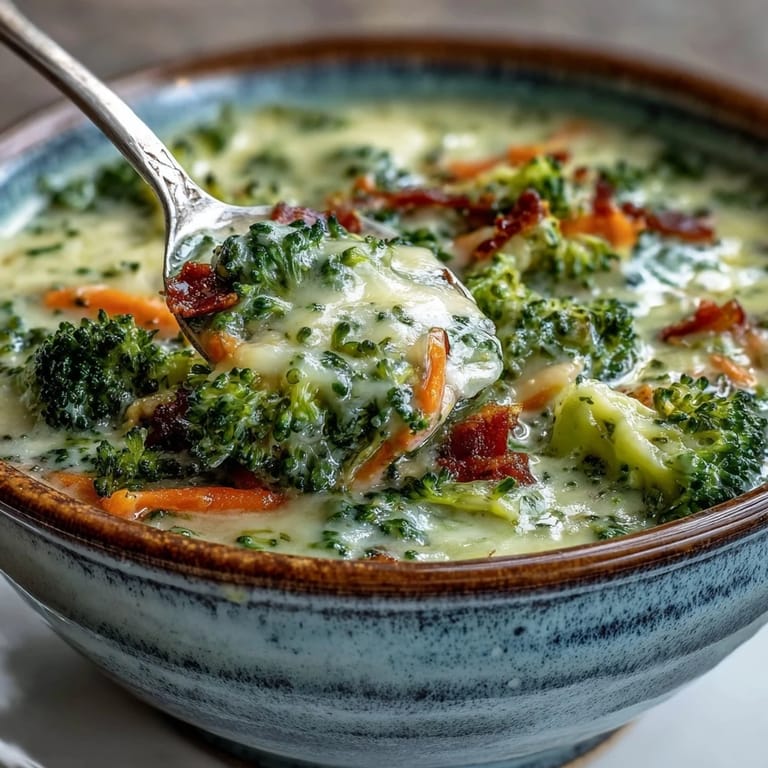
- Carrots: The shredded version adds sweetness and texture that keeps the soup from feeling too uniform, almost like tiny pockets of vegetable throughout.
- Onion and garlic: These are your flavor foundation—don't rush them, and don't skip the step where you cook the garlic separately; it makes a real difference.
- Sharp cheddar cheese: This is where people make their first mistake by using mild cheese; you need the bite of sharp cheddar or the soup tastes like it's missing something indefinable.
- Whole milk and heavy cream: The combination matters because whole milk alone makes it feel thin, but cream alone makes it heavy; together they hit a balance that feels indulgent without being overwhelming.
- Vegetable broth: Use good quality broth or even homemade if you have it; cheap broth will be salty and one-dimensional.
- Butter and flour: These create a proper roux that thickens the soup and adds body without making it gluey or lumpy.
- Paprika and nutmeg: Optional but absolutely worth it; a pinch of nutmeg in particular makes people wonder what you've done differently without being able to identify it.
Tired of Takeout? 🥡
Get 10 meals you can make faster than delivery arrives. Seriously.
One email. No spam. Unsubscribe anytime.
Instructions
- Build your base with butter and aromatics:
- Melt the butter over medium heat, then add your chopped onion and let it go soft and almost translucent—this takes about four minutes and you'll know it's ready when it looks like wet glass. The kitchen should start smelling rich and inviting.
- Wake up the garlic:
- Stir in your minced garlic and cook just one more minute; you want it fragrant but not brown or bitter, which can happen faster than you'd expect.
- Make your roux:
- Sprinkle the flour over the onions and stir constantly for two minutes so it toasts slightly and the flour gets coated in butter. This is the thing that stops your soup from being thin and watery.
- Add the broth carefully:
- Whisk in the vegetable broth gradually while stirring, making sure no lumps form; if you pour it all in at once you'll end up with little flour clumps that are hard to dissolve. The mixture should look smooth and slightly thickened.
- Cook the vegetables tender:
- Add your chopped broccoli and shredded carrots, bring to a simmer, and let it bubble gently for fifteen to twenty minutes until the broccoli is tender enough to fall apart if you press it. You'll see the broccoli lose its bright green and turn a deeper, softer shade.
- Add dairy gently:
- Reduce heat to low, then stir in the milk and cream—never boil this point or the dairy can separate and you'll end up with a weird texture. Keep stirring and let it heat through slowly.
- Melt in the cheese:
- Add your grated sharp cheddar one handful at a time, stirring between additions so each batch melts completely before you add more. This prevents the cheese from getting stringy or clumping up.
- Season and adjust:
- Add salt, pepper, paprika, and nutmeg, then taste it honestly—season more if needed because soup tastes different at different temperatures and you might need another pinch of salt.
- Blend if you want smoothness:
- Use an immersion blender to partially puree if you like a silkier texture, or skip this entirely if you want to see the vegetables. There's no wrong choice.
- Serve hot with intention:
- Ladle into bowls and serve with crusty bread that can soak up the creamy goodness.
 Save
Save  Save
Save There was a morning last winter when I made this soup for my neighbor who'd just had surgery and couldn't manage much food, and watching her eat something warm and satisfying felt like the one useful thing I could do. Soup does that—it becomes more than dinner when someone needs it to be.
The Texture Question
Some people want their soup completely smooth like restaurant-quality bisque, while others prefer chunks of broccoli and carrot you have to chew through. I usually aim for somewhere in the middle—blended enough that the broth coats your spoon richly, but rough enough that you can still identify what you're eating. An immersion blender gives you total control here, which beats any other method because you can stop exactly when it feels right to you.
Making It Your Own
This soup is forgiving enough to bend to what's in your kitchen or what sounds good that day. I've made it with cauliflower replacing half the broccoli when broccoli looked tired at the market, and the result was just as satisfying. Sometimes I add a dash of hot sauce at the end, sometimes I don't, and both versions have their moment depending on my mood and what time of year it is.
Storage and Reheating
This soup keeps beautifully in the refrigerator for about four days and tastes even better the next day once all the flavors get acquainted. When you reheat it, do it slowly over low heat with a splash of milk or broth stirred in, because reheating on high can cause the dairy to separate and you'll lose that silky texture you worked for. I've also frozen half of batches and thawed them on sleepy mornings when I wanted something substantial without cooking.
- Always taste before serving after reheating because flavors can shift and you might want to adjust seasoning.
- If you're making this for a crowd, you can prepare it up to the cheese-melting step ahead of time, then finish with dairy and cheese right before serving.
- Crusty bread is non-negotiable—it's not a luxury, it's part of the whole experience.
 Save
Save 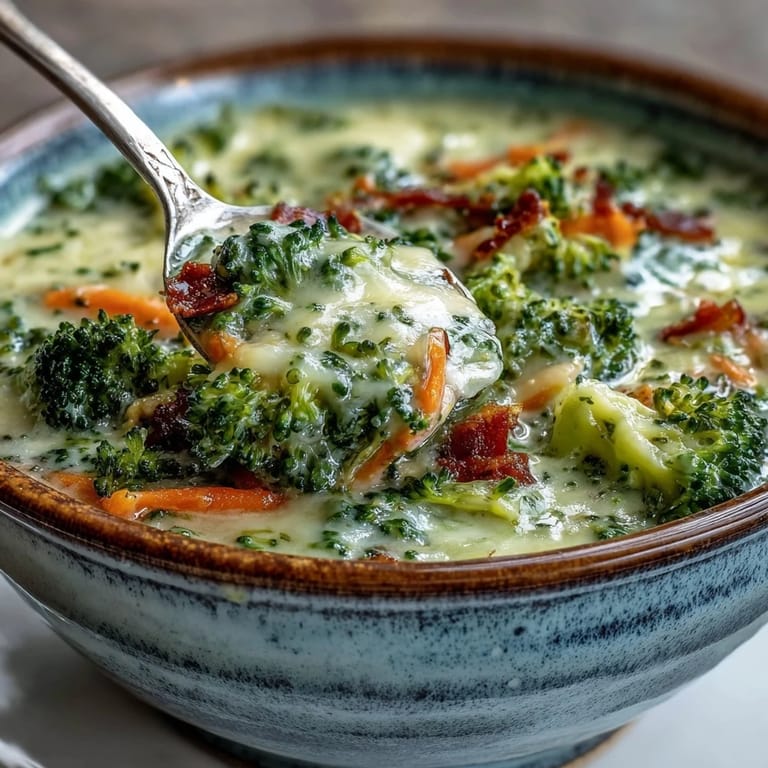 Save
Save Make this soup when you want to feel like you've done something nourishing without the stress of complicated technique. It's the kind of dish that reminds you why people cook in the first place.
Recipe FAQs
- → Can I make this soup ahead of time?
Yes, you can prepare this soup up to 2 days in advance. Store it in an airtight container in the refrigerator and gently reheat on the stovetop over low heat, stirring frequently to prevent separation. You may need to add a splash of milk or broth to adjust the consistency.
- → How do I prevent the cheese from clumping?
Add the grated cheddar cheese gradually, one handful at a time, while stirring constantly over low heat. Make sure the soup is not boiling when you add the cheese, as high heat can cause the proteins to seize and become grainy. Using freshly grated cheese instead of pre-shredded also helps achieve a smoother texture.
- → Can I freeze broccoli cheddar soup?
While possible, freezing is not recommended for this soup because the dairy components may separate and become grainy when thawed. If you must freeze it, do so before adding the cheese and cream, then stir those in fresh when reheating.
- → What can I substitute for heavy cream?
For a lighter version, you can use half-and-half or additional whole milk, though the soup will be less rich. Greek yogurt stirred in at the end adds creaminess with fewer calories. For a dairy-free option, use coconut cream or cashew cream along with dairy-free cheese alternatives.
- → How can I make the soup thicker or thinner?
To thicken the soup, add more flour to the roux at the beginning, or blend more of the cooked vegetables to create a thicker base. You can also simmer uncovered to reduce liquid. To thin it, simply add more vegetable broth or milk until you reach your desired consistency.
- → What type of cheddar works best?
Sharp or extra-sharp cheddar provides the most robust flavor that stands up well to the other ingredients. Avoid using mild cheddar as the flavor may be too subtle. For best melting results, grate the cheese from a block rather than using pre-shredded cheese, which contains anti-caking agents.