 Save
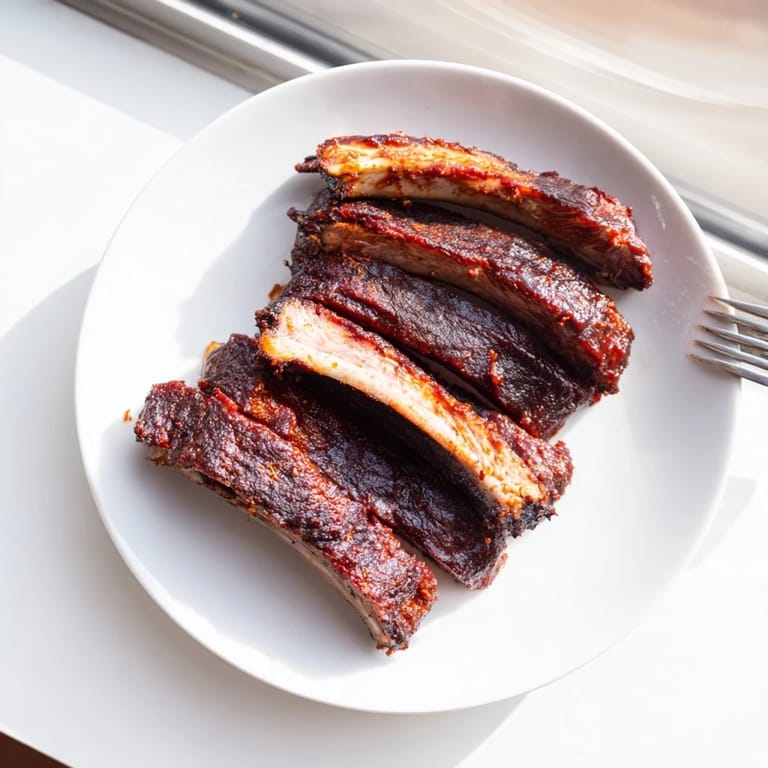
Save The smell of slow-cooking ribs has this way of taking over the entire house, seeping into every corner until everyone wandering through the kitchen starts hovering around the oven door. I learned this recipe during a summer when my apartment became the unofficial testing ground for every barbecue technique I could find. The first batch turned out decent enough, but somewhere between over-glossing with sauce and rushing the final glaze, I figured out what actually makes ribs worth the wait. Now its become the thing people request most often, even though the recipe itself feels almost too simple to be that good.
Last summer, I made these for a small backyard gathering that somehow turned into fourteen people showing up with hungry expectations. I doubled the recipe, panicked halfway through when the sauce started caramelizing faster than expected, and ended up pulling them from the oven at exactly the right moment. Watching everyone go quiet for that first bite, then immediately reach for seconds, made all those previous trial runs worth every minute.
Ingredients
- 1.5–2 kg pork or beef ribs: The membrane on the back needs to go for the rub to really work its way into the meat
- 2 tbsp olive oil: This helps the dry rub stick and creates a better crust as it slow cooks
- 2 tbsp brown sugar: The key to getting that caramelized exterior without burning
- 1 tbsp smoked paprika: Do not skip this unless you want ribs that taste like plain roast pork
- 1 tsp garlic powder: Fresh garlic burns too easily at these long cooking times
- 1 tsp onion powder: Rounds out the savory notes underneath all that smoke
- 1 tsp ground black pepper: Adds just enough heat to balance the sweet glaze
- 1 tsp salt: Essential for bringing out the natural pork flavor
- ½ tsp cayenne pepper: Totally optional but worth it if you like any background warmth
- 1 cup barbecue sauce: Pick something you actually enjoy eating straight from a spoon
- 2 tbsp honey: This is what makes the glaze get sticky and glossy instead of just painted on
- 1 tbsp apple cider vinegar: Cuts through all that sweetness so the sauce does not become cloying
Tired of Takeout? 🥡
Get 10 meals you can make faster than delivery arrives. Seriously.
One email. No spam. Unsubscribe anytime.
Instructions
- Prep your oven and pan:
- Set the oven to 150°C (300°F) and line a baking sheet with foil because the cleanup will be miserable otherwise.
- Get the ribs ready:
- Pull off that thin membrane from the back side using a paper towel for grip, then pat the ribs completely dry.
- Make the rub happen:
- Rub the ribs all over with olive oil, then mix every single dry spice together and press it generously onto every surface.
- Start the long cook:
- Place the ribs meat-side up, wrap the entire pan tightly with foil, and let them cook slowly for about 2 to 2½ hours.
- Check for tenderness:
- The meat should pull away easily from the bone when you give it a gentle tug.
- Whisk up your glaze:
- Stir together the barbecue sauce, honey, and vinegar until completely smooth.
- Glaze and caramelize:
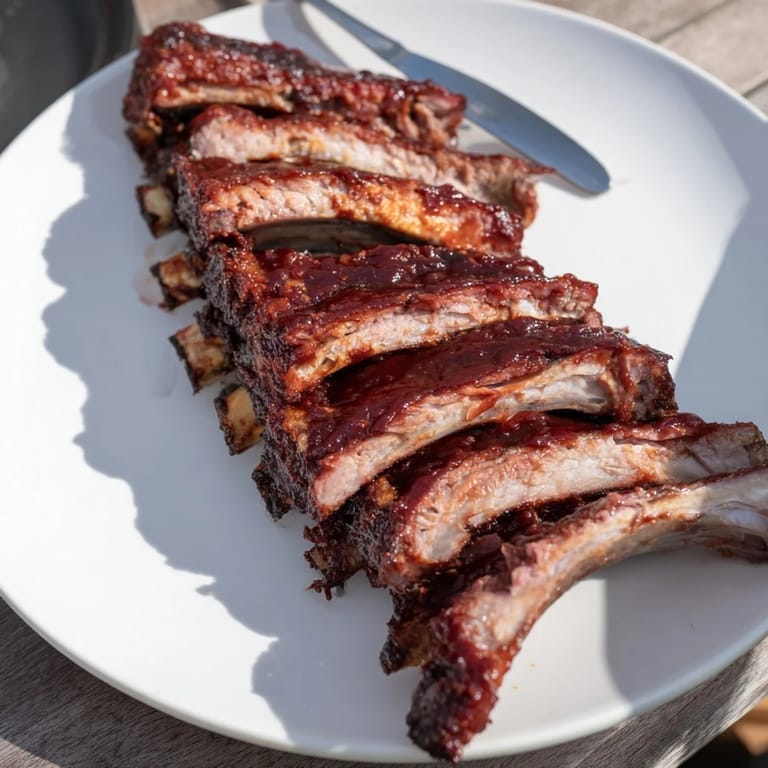
- Brush the ribs generously with that sauce mixture and cook them uncovered for 10 to 15 minutes, basting once halfway through, until everything looks sticky and gorgeous.
- Let them rest:
- Give the ribs five minutes to settle before slicing between the bones, otherwise all those juices run right out onto the cutting board.
 Save
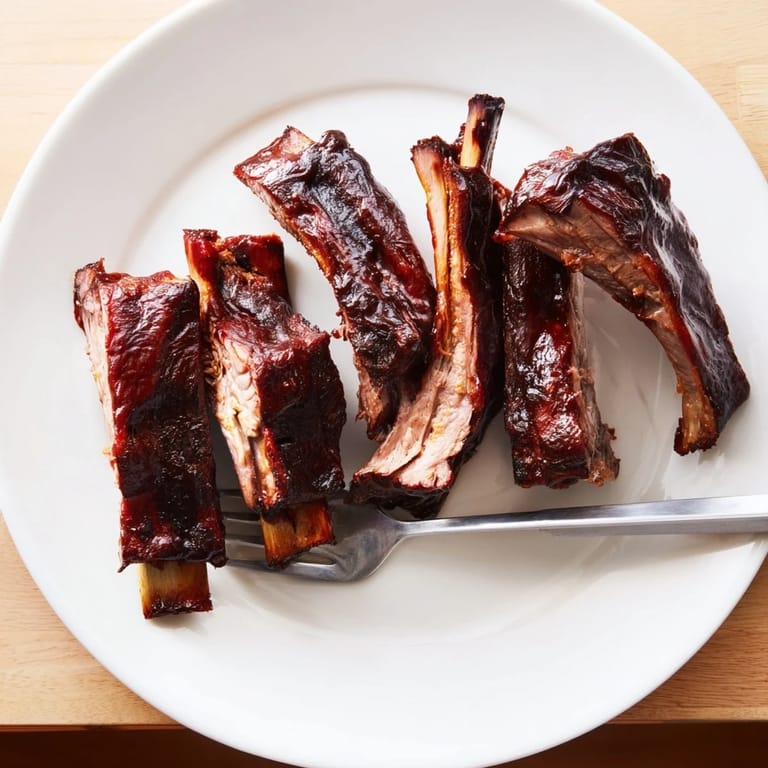
Save These ribs have become my go-to for celebrations because they somehow make an ordinary Tuesday feel like a proper occasion. Something about eating ribs with your hands brings out a different side of people, more relaxed and present, less worried about manners and more focused on the food.
Getting That Perfect Texture
The low-and-slow phase is non-negotiable if you want the meat to actually pull away from the bone instead of staying tough and chewy. I tried rushing this once at a higher temperature, and the difference in texture was obvious immediately, like comparing pot roast to shoe leather.
Grill Versus Oven Finish
Finishing on the grill adds that subtle smoke flavor you can never quite replicate indoors, but the oven gives you more control over the caramelization. On rainy days, I stick with the oven method and nobody has ever complained about missing outdoor grilling flavor.
Making It Your Own
The dry rub is endlessly adaptable once you understand how each ingredient contributes to the final flavor profile. I have experimented with adding coffee powder, swapping brown sugar for maple, or doubling the cayenne when feeding friends who claim they love heat.
- Let the rub sit on the ribs for an hour before cooking if you have time
- Keep some extra sauce warm on the stove for serving
- Cornbread or simple coleslaw balances all that richness perfectly
 Save
Save There is something deeply satisfying about serving food that makes people pause conversations and just eat for a moment. These ribs are that kind of dish, the ones that turn a meal into a memory.
Recipe FAQs
- → How do you ensure ribs turn out tender?
Slow cooking at a low temperature allows the collagen to break down, resulting in tender, juicy ribs that easily pull from the bone.
- → Can I use different types of ribs?
Yes, both pork and beef ribs work well with this method, though cooking times may vary slightly depending on thickness.
- → What’s the purpose of the dry rub?
The dry rub infuses the meat with balanced smoky, sweet, and spicy flavors that enhance the glaze’s richness.
- → Why bake before grilling the ribs?
Baking slowly cooks the ribs to tenderness, while the final grilling caramelizes the glaze, adding texture and flavor.
- → What are good side dishes to serve?
Classic sides like coleslaw, baked beans, and cornbread complement the smoky richness of the ribs perfectly.
- → Can I substitute honey in the glaze?
Maple syrup is an excellent alternative to honey, offering a different yet compatible sweetness.